
The Unity Care Pathway: Physiotherapy — The First Step to Restoring Movement and Function
- Unity

- Dec 23, 2025
- 4 min read
At Unity Health & Performance, every recovery journey begins with clarity. Whether you’re managing pain, recovering from injury, or returning to activity after surgery, the first step is understanding what’s really happening — and creating a plan that restores both movement and confidence.
That’s where physiotherapy comes in.
Physiotherapy represents the first stage of the Unity Rehab Care Pathway — our structured, evidence-informed system designed to take you from pain through to performance. In this initial phase, the focus is on joint-specific assessment, targeted rehabilitation, and early load management, laying the foundation for full recovery and long-term resilience.
Why Start with Physiotherapy?
When pain or dysfunction begins, it’s easy to focus on the area that hurts. But pain is often the body’s way of signalling imbalance, weakness, or overload — not just local damage.
The physiotherapy phase focuses on:
Identifying the true source of symptoms through detailed clinical assessment
Restoring safe joint movement and mobility
Managing inflammation and tissue healing
Prescribing the right exercises at the right stage of recovery
Building confidence in movement again
Early intervention is key. Research consistently shows that active, exercise-based physiotherapy reduces recovery time, prevents chronicity, and supports better long-term outcomes compared with passive or purely medication-based care (Foster et al., 2018; Oliveira et al., 2018).
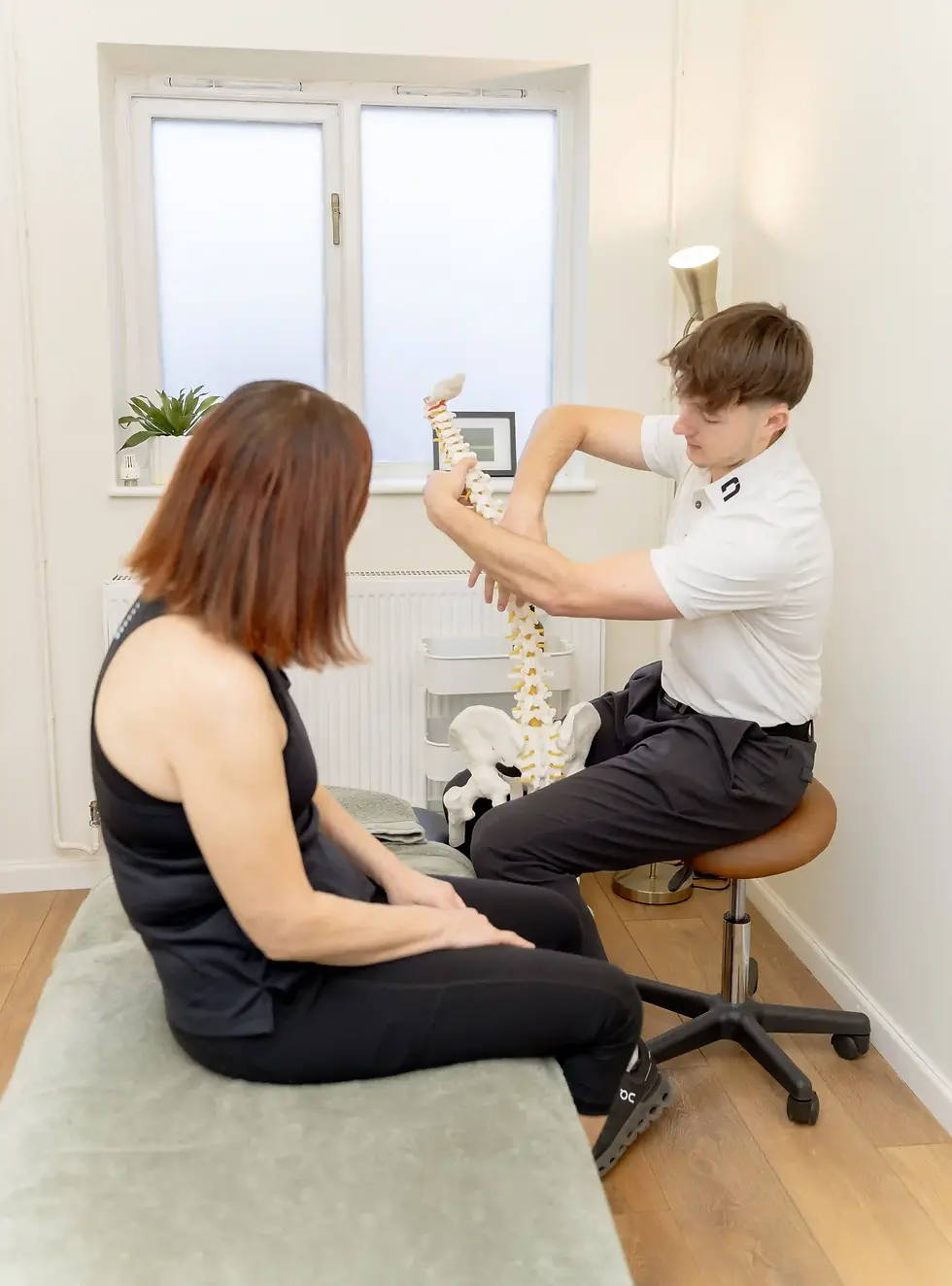
What Happens During Physiotherapy at Unity?
Your first appointment is about clarity and confidence. We take the time to:
Assess your joint and movement patterns — understanding what’s contributing to your symptoms.
Explain your diagnosis clearly — no jargon, no guessing.
Create a structured plan that balances rest, movement, and strength-building.
Begin rehabilitation immediately — with simple exercises and self-management tools from day one.
Depending on your condition, your physiotherapy phase may include:
Joint mobilisation and manual therapy to restore range
Early-stage strengthening and mobility work
Load progression and tolerance testing
Pain and movement education
Home-based exercise programming
Acupuncture
We focus on what you can do rather than what you can’t — keeping you active and engaged throughout recovery.
The Clinical Evidence for Early Physiotherapy
A growing body of research supports early physiotherapy intervention for musculoskeletal (MSK) conditions:
Reduced pain and disability: Patients receiving early physiotherapy for low back pain demonstrate improved function and reduced pain intensity compared to delayed or no physiotherapy (Fritz et al., 2012; Ojha et al., 2016).
Shorter recovery and lower costs: Direct access to physiotherapy reduces waiting times, imaging rates, and medication use while improving satisfaction (Desmeules et al., 2012; Goodwin et al., 2017).
Better long-term outcomes: Structured, active rehabilitation leads to superior outcomes compared to rest or passive care alone, particularly for recurrent injuries (Foster et al., 2018).
Physiotherapy provides the foundation for safe, progressive movement. It restores the local joint and surrounding tissues, prepares you for integrated rehabilitation, and gives your clinician team a clear understanding of your baseline function before progressing to the next phase.

The Next Step: From Local to Global
Once pain is reduced and movement is restored, your care progresses naturally into the next stage of the Unity Rehab Care Pathway — Osteopathy, where the focus shifts from a local, joint-specific view to a whole-body approach.
This seamless transition prevents gaps in your care, reduces re-injury risk, and ensures that your recovery addresses both the symptom and its underlying cause.
Why It Works
The Unity model recognises that pain, function, and performance exist on a continuum. Each stage of care — physiotherapy, osteopathy, and sports therapy — has its own purpose.
By starting with physiotherapy, we respect the body’s need for safe, specific recovery before layering in global integration and performance. This step-by-step approach is what allows our clients to truly get their lives back — not just short-term relief.
Conclusion
Physiotherapy is the entry point to the Unity Rehab Care Pathway — the stage where clarity meets movement.
Through evidence-based rehabilitation, joint-focused assessment, and early activation, physiotherapy helps you move out of pain, regain control, and set the stage for lasting recovery.
It’s not about treating pain in isolation — it’s about rebuilding strength, trust, and resilience from the ground up.
References
Desmeules, F. et al. (2012). “Validation of an Advanced Practice Physiotherapy Model of Care in an Orthopaedic Outpatient Clinic.” BMC Musculoskeletal Disorders, 13(107).
Foster, N. E. et al. (2018). “Prevention and Treatment of Low Back Pain: Evidence, Challenges, and Promising Directions.” The Lancet, 391(10137), 2368–2383.
Fritz, J. M. et al. (2012). “Early Physical Therapy vs Usual Care in Patients with Recent-Onset Low Back Pain.” Spine, 37(14), 1175–1182.
Goodwin, R. W. et al. (2017). “First Contact Physiotherapy in Primary Care.” British Journal of General Practice, 67(665), e519–e525.
Ojha, H. A. et al. (2016). “Timing of Physical Therapy Initiation for Non-Specific Low Back Pain and Patient Outcomes.” Journal of Orthopaedic & Sports Physical Therapy, 46(3), 163–172.
Oliveira, C. B. et al. (2018). “Physical Therapy for Musculoskeletal Pain: A Clinical Practice Guideline.” BMJ, 361:k2942.


Comments